Mostrando entradas con la etiqueta Neofolk. Mostrar todas las entradas

domingo, 22 de enero de 2012

CLXXVII. Backworld | Come The Bells


Come The Bells
©Discalcula. US, 2011.


‟Backworld founder Joseph Budenholzer grew up in Nebraska, immersed in the rural lore and religious traditions of the region. He attended parochial school where he was taught by nuns to play the guitar for folk Mass. He worked for years at The Omaha Magic Theatre, an offshoot of The Open Theatre in New York, as composer in residence. Moving to New York City's East Village in the mid-1980s he performed at St Mark's Poetry Project and began collaborating with dance performer Brian Moran, aka Blood Boy, creating sampled soundscapes for confrontational Actionist assaults. This led to the Cinema of Transgression scene where he worked with filmmakers Richard Kern, Beth B, and Tessa Hughs-Freeland, and composer JG Thirlwell (Foetus). Eventually a series of collaborations with Lydia Lunch resulted, culminating in the double CD, Matrikamantra, a work of psycho-acoustic theatre in the form of a homage to Romanian philosopher poet EM Cioran. In 1990 he enrolled in NYU's Gallatin Division, focusing on Eastern European theatre, traveling to study in Russia and Bulgaria, and later touring Poland and the Czech Republic.

"I formed Backworld in 1993, owing to a passion for English folk music, certain aspects of 60s psychedelia, and Christian mysticism. I wanted to make music that could reflect these interests and hopefully be as spiritual and beautiful."


After joining forces with World Serpent Distribution (London) in 1995 four studio albums resulted, Holy Fire (1996), Isles of the Blest (1997), Anthems from the Pleasure Park (1999), Of Silver Sleep (2001) The Fourth Wall (2001 live at the Bloomsbury Theatre, London); and Good Infection (2007) Come The Bells (2011)

Backworld's albums and early performances at CBGB's 313 Gallery and the NYU Experimental Theatre Wing and more recent concerts at House Leipzig, Germany; Grandson Castle, Switzerland; Bloomsbury Theatre, and St. Olave's Church, London; St. Mary's Cathedral, Glasgow have featured a changing roster of players but the course is still steered by Joseph's constant vision. Arrangements of guitar, strings, percussion, flutes, electronics, revolve around lyrics concerned with ecstatic religious yearnings and otherworldly visions. Guest performers on BW albums have included Jarboe of Swans and Michael Cashmore of Current 93. In 2006 Joseph returned to NYC after three years living in Scotland where he recorded the bulk of 'Good Infection' released in 2007, enlisting the talents of Isobel Campbell (Belle & Sebastian, Gentle Waves), David Tibet (Current 93) and Drew McDowall (Coil) to contribute vocals and other textures to the sessions. Other notable collaborations include playing in Current 93 and co-writing and producing the Little Annie album "Songs from the Coal Mine Canary" with Antony Hegarty (Antony and The Johnsons).‟

CLXXVI. Cult Of Youth | Cult Of Youth


Cult Of Youth
©Sacred Bones. US, 2011.


‟Al parecer Sacred Bones Records nos sigue la pista o se tratará de una gran coincidencia de gustos musicales, no lo sabemos, lo único cierto es que cada placa que editan llega como delicado agasajo hasta nuestro congelado refugio esquimal.
Ahora enfocados en mostrar la creación agreste del proyecto de Brooklyn, Cult Of Youth con Sean Ragon a la cabeza, aparecidos a fines de la década pasada se mueven por las honduras del Darkfolk y los ambientes Post-Industriales.

Desde un comienzo este trabajo nos lleva por la gris marcialidad sonora de Boyd Rice y sus NON mutados por la locura de The Pogues, en "New West" la voz de Ragon se acerca a la vibrante insanidad de Shane MacGowan, todo adornado por el violín de Christiana Key en una cabalgata de rumor After Punk.
Para este segundo album Cult Of Youth se ha transformado en un cuarteto, con una robusta base rítmica a cargo de Micki Pellerano en bajo y Glenn Maryansky en batería, lo que redunda en un sonido más definido y poderoso que el de sus anteriores entregas, ahora son un cuerpo sólido manifestando con propiedad esa lujuria siniestra que llevan en su centro canciones como "The Dead Sea" y "Monster", el traspaso desde Crisis a Death In June o una especie de Swans en anfetas.
Ya más instrospectivos en "Casting Thorn" sentimos la oratoria maldita de Ragon bajo una atmósfera percusiva machacante, de a poco van subiendo de intensidades a base de violines espectrales y una guitarra acústica rasgada con desenfreno, al final todo se transforma en un fatídico vómito del corazón negro. Otro tramo purificador es "Weary" oscuros viajantes en la aldea bucólica de los tiempos finales.

Eso es "Cult Of Youth" un álbum apocalíptico y violento, una ceremonia nefasta.‟

Raúl Cabrera H.


lunes, 9 de enero de 2012

CLXVII. Lux Interna | Ignis Mutat Res


Ignis Mutat Res
©Eis Und Licht. Deutschland, 2004.


‟With their songs steeped in a spiritual and romantic tradition Lux Interna sit within the dark folk genre. Their music is primarily acoustic folk, swathed in string arrangements, but just as their erudite and poetic lyrics delivered by the twin vocalists, Joshua and Kathryn Gentzke, seek to locate the divine, their music strives to break free of the confines of the neo-folk genre. [a lantern carried in blood and skin] carries elements of dark Americana, ethereal folk music, misty atmospherics and at points the voices combine to create something closer to country and western.

You can piece together the trajectory of the group through the selection of tracks from the skeletal acoustic tracks of 'For An Autumn Girl' and 'Flowers Under Glass', where Kathryn's delicate tones takes the lead over the still, frosted setting of piano, guitar and tambourine accompaniment. These contributions from Absence and Plenum are sparse when compared to the rich arrangements of Ignis Mutat Res. The forceful ringing dark folk and dramatic strings of 'Horizon' where Joshua Gentzke voice resonates deeply, shadowed by the smooth gentle female voice of his wife, Kathryn is a strong opening track. And while 'Horizon' shares an affinity with fellow Americans Backworld, 'A Season Apart' captures a feeling of desperation as Gentzke's impassioned cries break over heavy piano chords, giving way to rolling drums before settling into a sort of decadent European feel as violins scrape furiously as an agglomeration of voices combine to intone: "this rune is carved in skin, yet deeper within..." It's impressive stuff.
‟


jueves, 5 de enero de 2012

CLXIV. Joy Of Life | Enjoy / Hear The Children


Enjoy / Hear The Children
©Hyperium. Deutschland, 1992.


‟Joy Of Life were a London based post-punk four piece initially influenced by Joy Division and early New Order.
Their debut LP, Enjoy was released in 1985 on Death In June's New European Recording's label and produced by Douglas Pearce. At the time the band were seen as a DIJ copyist act although their sound was more conventional with considerably milder Germanic overtones.
Joy Of Life were never a neo-folk act like Death In June, but did suffer a great lack of credibility from their affiliations with the other bards of Woking.
Following flirtations with major labels, no actual recordings just presumably lots of tapes and discussion, Joy Of Life did not release the follow up album until 1988 on their own Cadre label. This was a much darker affair with Gothic overtones, though the bass line on opener Liberty sounds very familiar. The band split shortly afterwards, but have reformed several times since to play Goth Festivals in Germany.
Both albums were had very limited runs and are long deleted, though German label, Hyperium reissued them as a single CD and limited edition CD box in 1992 from which these tracks are ripped. Joy Of Life were never an important band and were never really a good band, nobody will really ever miss them, though 20 years on their output does make interesting hearing for those inquisitive enough to listen.‟


martes, 3 de enero de 2012

CLXI. Various Artists | Im Blutfeuer


Im Blutfeuer
©Cthulhu. Deutschland, 1995.


‟Tan misteriosa como su nombre es la música que encontramos en esta placa, donde se reunen bandas de reconocida trayectoria como Death In June y Sol Invictus junto a otras muy prometedoras como lo son Blood Axis, Ernte y Allerseelen.
El inicio corre por cuenta de Blood Axis con 2 temas, el primero "Walked In Line" un cover de Joy Division en el que se aprecia un sonido oscuro y crudo muy en la línea de los de Mnachester, el sengundo corte de Blood Axis "The Storm Before The Calm" está directamente influenciado por Death In June, en el cual un piano da comienzo a una triste pieza musical; acompañado por lluvia, truenos, vientos y ruidillos varios que van formando la atmósfera perfecta para una inquietante abstracción.
Una balada acústica es la que ofrecen Ernte en su corte "Sonnenwende", la unión de voces por parte de Will-I Stasch y Rose Kasseckert nos seducen de principio a fin, y si a esto agregamos la participación de Tony Wakeford en guitarras, en entorno se vuelve alucinatemente celestial.
Siempre en una compilación hay un tema que sobresale en forma especial, ya sea por su originalidad, por su interpretación, por los arreglos o su magia. En este caso "Hebba Gabbler" de Sol Invictus es un joya de pieza musical, piano y cello adormecen melancólicamente bajo la voz de Wakeford, produciendo un estado de calma imborrable, uno de los mejores temas del grupo que he escuchado (con letra del Sr. John Cale además).
Apartándose un poco de la sutileza quietud de este álbum, Allerseelen se hace presente con "Santa Sangre" (canción inspirada en la película del chileno Jodorowsky). Un corte ácido e industrial, fuerte y opresivo con grabaciones del film y mucha niebla, similar a lo que hace gente como In Slaughter Natives o Metal Destruction.
Finalmente Death In June nos regala "My Black Diaries", un tema caótico, lleno de sonidos y sin un ritmo a seguir, sólo la tristeza y la intuición nos conducen por la poesía maldita de Douglas Pierce.

Para ser un sello tan poco conocido como Cthulhu Records, impresiona por las bandas que logra reunir, un buen apronte para seguir investigando.‟

José Villegas
(Revista Fakxion, 1998 Rancagua, Chile)


lunes, 2 de enero de 2012

CLVIII. Argine | Luctamina In Rebus


Luctamina In Rebus
©Oktagön. Italia, 2001.


‟This accomplished album has a very full sound, and is characteristic of the best of Italian neofolk, whilst betraying other influences and styles. It has a gothic-industrial opening 'Luctamina Rerum Naturum Alunt' and soon demonstrates the group's classical abilities with 'De Versa Rosa'. On other tracks the choppy, frenetic violin playing shares the excitement of Matt Howden's style, so the instrumentation is sometimes reminiscent of Sol Invictus. 
I particularly enjoyed 'Urla (Frammenti D'Infinito)', a neofolk track featuring alternate male and female vocals, the furious violin and drum rolls. I also liked the nostalgic trumpet sound on 'Arm' which reminded me of early Death In June. 
My restaurant Italian is not up to translating the songs but we are told that Luctamina In Rebus is "a concept album about the conflicts between Nature and Man, between Man and Man and between Nature and Nature." The album comes in a beautifully produced gatefold digipak with a booklet featuring the lyrics and illustrated with Roman stucco paintings. Two members of Argine also belong to Anima in Fiamme.‟

Fluxeuropa


sábado, 10 de diciembre de 2011

CXLVIII. Rising Shadows | Falling Deep Within


Falling Deep Within
©Twilight. Argentina, 2006.


‟Falling Deep Within is the debut album of RISING SHADOWS. A beautful journey into the darkness of ourselves and our past. Featuring the enchanting vocals of Linda-li. This is music for the soul and it will paint your mind images and dreams.

Rising Shadows started back in 1996 under the name Shadow of the Concealed. Within the first year of existence The Gathering was made. The demo however remained unreleased due to quality reasons. Work instead began on a second tape called The Seventh Gate.

The release in autumn 1997 coincided with the change of bandname into Rising Shadows. Still the only person involved was Fredrik Klingwall. Another cassette was recorded to promote the change of name but it wasn´t exactly wellspread. The first Rising Shadows release worth of it's name came over a year later. In autumn 1999 Delirium was released. It passed by rather unnoticed and Fredrik started writing more filmmusic and solowork instead. While Rising Shadows more and more plunged down into oblivion. Over the years some material was made and the concept became clearer, in 2004 the time was right to bring life to this project. Together with singer Linda-li a new demo was created. Horror Vacui was released in August 2004.
 
Early 2005 the track 'Vacui' was contributed to the Waerloga Compilation; A Tribute To Uglakh. Along with such acts as The soil bleeds black, Za Frûmi, Sagor & Swing, Autumn tears and many more.
 
In February 2006 the debut album Falling Deep Within was recorded. For release through Argentinian label Twilight Records later this year.   
 
Soon the shadows will rise again!‟


sábado, 3 de diciembre de 2011

CXLI. Auto Da Fe | The Spectre


The Spectre
©Secret Eye. US, 2006.


‟In these heady days of Winter 2006, the tide seems to be turning against the folk renaissance that's been growing for the last two or three years. Joanna Newsom's Ys seems to be the most visible target, and I've seen fellow pioneer Devendra Banhart oft disparaged in print. So perhaps the scene, if it ever was such a thing, is coming to it's close. If so, it's remarkable that in these late days, there are still albums being produced from the genre that can surprise with their originality.

The thing is, folk these days tends to tread in two separate camps. There's the blisfully mellow and melancholy, such as Iron & Wine and Sufjan Stevens, then there's the weirded-out "I take acid, me!" zanier, more experimental variety. The Spectre could be said to have emerged from the wellspring of the latter style, if it weren't for it's upbeat pop sensibility. Except that it isn't really pop. Imagine if The Residents had taken on folk, rather than blues and '60s pop. That video of Third Reich and Roll doing the rounds on youtube, the speeded up footage of pointy headed clowns hammering away in joyous abandon, that's how I imagine the recording session of this album. A studio strewn with eclectic and exotic instruments, and the participants running amok, plucking, stumming and battering with wild-eyed, joyous enthusiasm.  How the hell they manage such enthusiasm, such a bewildering array of instrumentation, and such an ear for a sublime melody line, is utterly beyond my ken.

Somehow, the whole thing works. The aformentioned pop sensibility, the knack of finding an inescapably catchy hook, is counterpointed by Tara Tavi's magnificent vocal style. Beautiful, capable of a splendid sultriness, but there's something underlying that's just off-kilter, world-weary, and just a little sour. Even at her most up-front and vibrant, as when hollering over the poundings of "Just Now", there's such a sense of ... well, not quite bitterness, but a wryness, a voice expressing past disappointment.

What really glues the album together as a whole though, are the instrumental tracks. Breaking up the immediacy of the album, which could quite frankly be too catchy to bear without these gorgeous instumental breaks. They also provide a perfect form of navigation between wildly varied styles. For instance, the gorgeously rendered "Mao Meow" manages to take the listener from the off-kilter pipes of "Isittle Alili", to Child of Typhoon's Oriental pickings without missing a beat.

This release seems either to have flown under the radar of publicity, or just not been well received at all. Perhaps it's the ambition of the work. Perhaps it's because it seems so separate from what everyone else is doing. Whatever the reason, I can see the profile of this band rapidly rising. A very special release indeed.‟

Drunkenfish


domingo, 27 de noviembre de 2011

CXXXIII. Current 93 | Earth Covers Earth


Earth Covers Earth
©Durtro. UK, 1992.


‟As most of you know by now, I'm a wee bit of a C93 obsessive.  Well this album is to blame for that I'm afraid, this was my introduction to their warped and twisted world.  Not an album I'd recommend as a starting point, but a damn fine listen nonetheless, this album was released when C93 were still trying to find their folky feet, and David Tibet was trying to discover his true voice.

The original release is only 6 tracks long, starting with versions of "The Dilly Song", a simple nursery rhyme, sung unaccompanied.  "Hourglass" makes two appearances, one narrated/sung by David Tibet, one narrated by a child's voice.  The lyrics are from a 17th century poem by John Hall, showing that Tibet yet wasn't really confident in using his own poetry, but also using Hall's words perfectly to deliver his message.  The only genuine C93 classic from this original set of tracks, is "Rome (for Douglas P)", a live favourite still, a folky singalong of a song, which would have graced an album such as Thunder Perfect Mind.

The additional tracks on the CD version, really make this release the 5 star release that it is.  The two versions of "At the Blue Gates of Death" are both essential, beautiful recordings.  One version is a shorter, paranoid vision of a song, with grinding backwards bass, the other, a gorgeous happy ode to a life well lived, you can feel the sun shining on your face as Rose McDowall's backing vocals perfectly complement Tibet's relaxed delivery.  "God Has Three Faces and Wood Has no Name", "She is Dead and all Fall Down" are two more slightly bonkers tracks, which would both fit perfectly on TPM.
Final track "The Dream Moves of the Sleeping King" really has no place on this, or any other C93 album.  That's not to say it's worthless, far from it, but it really is a Nurse with Wound style track, a long surreal melange of sounds, I can't see Tibet having had much input on it, it sounds practically all Stapleton to me.
‟

DarknessFish


lunes, 21 de noviembre de 2011

CXXVII. Sorrow | Under The Yew Possessed


Under The Yew Possessed
©Piski Disk. UK, 1993.


‟Sorrow is an English-based band that is the brain child of Rose McDowall, once known as one half of the 80s pop duo, Strawberry Switchblade. Rose's first band was called The Poems, an experimental three piece based in her hometown of Glasgow. While still with The Poems, Rose also joined with Jill Bryson as Strawberry Switchblade. The Poems released one EP entitled Achieving Unity, but they broke up shortly after its release, when Strawberry Switchblade began to gain popularity. Switchblade's top-five hit, "Since Yesterday," is featured on many 80s compilations, and still receives considerable club and radio play. Switchblade disbanded in 1986.
Since 1985, Rose has worked with many other bands, including Current 93, Coil, Death In June, Felt, and Psychic TV. Through the years Rose has carried on working in a more experimental vein, and ultimately formed SORROW, releasing their first LP, "Under The Yew Possessed", in 1993. They have since produced: "Sleep Now Forever" (1999), "Final Solstice" (1999), and "Let There Be Thorns" (2001).‟

Wassonii


domingo, 20 de noviembre de 2011

CXXVI. Neutral | Serpents In The Dawn


Serpents Of The Dawn
©Eis Und Licht. Deutschland, 2008.


‟The omnipresent violin breaks the melody into ‘Tales of Men and Trees’, doubling, swaying and changing. ASH’s grave voice takes over the song as soon as it appears. The melody is frugal, repetitive and circular. The guitar notes crackle trough the melody, their laconic sound counterpointing the elongated notes of the violin. The song is pure neo folk, melancholic, tainted in darkness and tantalizingly dipped in nature. With releases (both digital and physical) in Cynfeirdd, Heimdallr, Brudenia and now Eis & Licht , in ‘Serpents in the Dawn’ the Russian dark folk pioneers have reached a peak in their production. The delicacy in each song shimmers through the contrast of the voice line. The references to Current 93 especially, melodic Death in June and the more classic formations is obvious, but always appears with a personal touch. ‘The Starfall of the Nevermore’ is one of the examples: A tune that picks up DIJ ‘Something is Coming’ era, with a piercing chiming percussion, a languid violin melody and guitar arpeggios. The crude and straightforward tune the voice carries, taking turns against the violin spotlight. The inclusion of a female voice reciting, and the return to the main voice composition. A simple and precious work of art for any neofolk lover...‟

Isis


jueves, 17 de noviembre de 2011

CXXIII. Boyd Rice And Friends | Music, Martinis, And Misanthropy


Music, Martinis, And Misanthropy
©NER. UK, 1990.


‟I’ve been amused, confused and infused with the works and ideology of Boyd Rice. I’ve never been able to decide if Mr. Rice was as dark as the character he presents himself or if he was simply playing devil’s advocate, but I’d like believe that within all his proclamations that he was being honest, and that I wasn’t wrong for agreeing with him. I’ve always enjoyed his spoken-word messages because it wasn’t free-love hipsters preaching socialism. Combined with the moody, beautiful guitar ambience of Douglas P., Boyd Rice is given the chance to  really bring sense of calmness to the ears, allowing full hypnosis while his gentle voice encourages you to indulge on hate, take notice at life’s ugliness and except that most people are useless. The perfect example of this method at use is the track people. As well as being a ‘Boyd Rice and Friends’ classic, this song really exemplifies the subject matter, the intent, and the methods of this instigating poet. Along with help by Michael Moynihan, and the angelic vocals of Rose McDowall this is truly an intriguing record with infectious sounds capes, provocative commentary, and a sense of taboo enjoyment that anyone can love to hate. Boyd Rice and Friends is a classic example of what happens when you bring together a bunch or angry men sporting facist wardrobes, dark music and apparently hate everybody.‟

Deathmetaltyler 


domingo, 13 de noviembre de 2011

CXIX. Faith And The Muse | Elyria


Elyria
©Tess. US, 1994.


‟Faith and the Muse found me at a very good time, a time i was searching for something new to listen to, something i could really latch on to - the 'next big thing'. And they fit the bill perfectly. 'Annwyn, Beneath the Waves', their second, was actually the one to reach me first, but it was only a matter of time from there that i delved into the rest of their catalogue, including Elyria, their debut.

Very diverse band, tying in lots of gothic, Celtic, and even tribal influences... and i love tribal influences. Dark, atmospheric, moody, heavy, they run pretty much the whole Gauntlet of Goth. Vocalist/instrumentalist Monica Richards, formerly of Strange Boutique, has a wonderful, vaguely-Siouxsie Sioux-ish voice, and while she may be a little 'pitchy', the studio finds her at her best, and former-Christian Death/Mephisto Walz instrumentalist William Faith is simply incredible. And Elyria was a beautiful starting point for this highly-recommended band.‟

Drakkar


viernes, 28 de octubre de 2011

CIII. Death In June | Something Is Coming


Something Is Coming (Croatia Live! + Zagreb Studio)
©NER. UK, 1993.


‟A good live album inluding songs from up to 'But, What Ends When The Symbols Shatter?' (1992). The setting of the band is Douglas and Simon Norris, so the sound is quite minimalistic, but nonetheless is't quite powerful. The song picks are very good, it's fun to hear the old favourites in new verions. The release is in form of a double cd, one cd with a live performance and one cd with live studion performance from croatian radio. This release features new good versions of old favourites like "Fall Apart", "Runes And Men", "Leper Lord", "Torture By Roses" and "Heaven Street". I think this record will appeal as much to new Death In June fans as old fans. For a Death In June release it's very easy lisenable. Summa summarum, a very worthwile album if you like Death In June.  
Recorded live in Zagreb 1992. Benefits from this album were given to The Bolnicki Clinic, Zagreb, Croatia.‟


viernes, 23 de septiembre de 2011

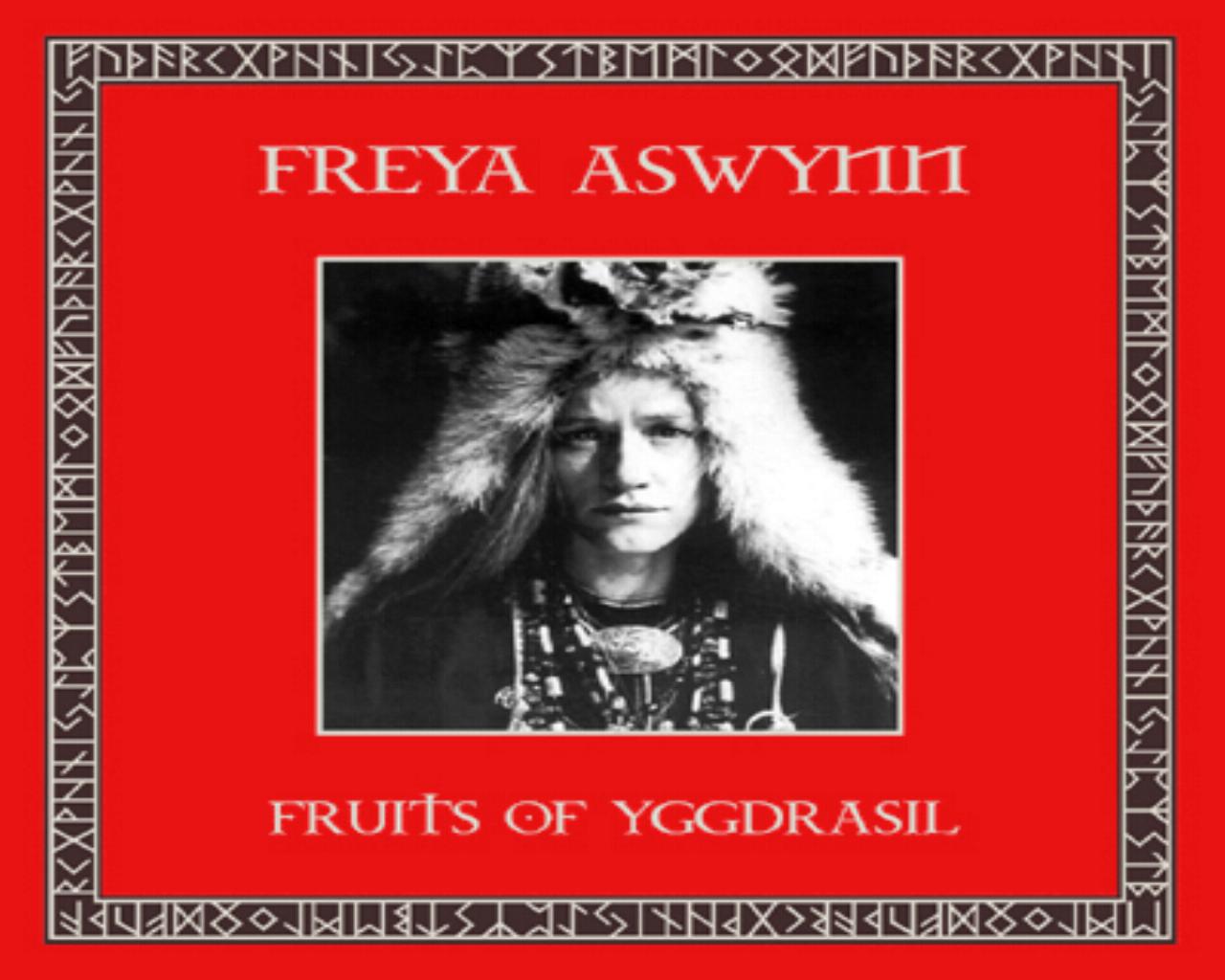
LXXX. Freya Aswynn | Fruits Of Yggdrasil


Fruits Of Yggdrasil
©Edition Ananael. Österreich, 2002.


‟For those of you who dont know, Freya Aswynn's is the entity created by Elizabeth Hooijschuur a figure of considerable distinction within the Norse heathen community, a dedicated priestess of Odin,  rune-mistress and writer that in past years has collaborated with some musical projects such as 6omm, Current 93, Les Joyaux De La Princesse and Fire+Ice, well know artists in the field of Neo-Folk music.
 Aswynn's" has  released three albums under her own name, The Fruits Of Yggdrasil was originally released as a limited-edition vinyl LP on Eyas Media in 1987,  1995’s Shades Of Yggdrasil  and 1998’s Songs Of Yggdrasil, which was released to accompany the Northern Mysteries and Magick book.  The Fruits Of Yggdrasil was re-released in 2002 on the Austrian label Edition Ananael, with bonus tracks including Freya’s tracks with Current 93 and Fire + Ice, as well as two tracks with Wayne Owens originally released on Shade of Yggdrasil, and it has now been released by the Hau Ruck!.
This album’s focus is on initiation into the northern mysteries, the sound is difficult to describe, the spoken words are always present, reciting magic and ancestry words, the tribal and industrial percussions set the pace,  haunting flutes and  background weird soundscapes thicken the beauty and mystery of this record, that i higgly recommend  if you have an open mind.
‟


viernes, 9 de septiembre de 2011

LXIX. Sol Invictus | Trees In Winter


Trees In Winter
©Tursa. UK, 1990.


‟El mundo está lleno de dioses y bestias, esta frase expresa parte del pensamiento en que vive y siente Tony Wakeford - fundador de esta banda - y quien es conocido por haber integrado Crisis y Death In June.
En 1987 fue creado Sol Invictus. El nombre de este grupo proviene de uno de los cultos romanos paganos más importantes y difundidos en el instante en que el cristianismo se encontraba casi aniquilado. "El Inconquistado Sol" sería su traducción literal y se trataba de un ferviente entusiasmo por la pureza obtenida y preservada por la beligerancia, la que era responsibilidad de los soldados del Imperio.
La intervención de atmósferas calmas que luego desembocan en estruendosos sonidos - ya sea de guitarra o percusión - y una voz que recita los pesares de nuestra época. Acústica depresiva, presente desde los primeros trabajos de esta banda.
El materialismo, la falta de espiritualidad y el exceso de racionalismo son tres tópicos contra los que Sol Invictus lucha y denuncia. Wakeford piensa que hay que volver a buscar en la naturaleza la esencia de las cosas. La magia de las runas es otro camino que él señala, su interés por ellas nació mientras integraba Death In June y no las concibe como objetos de adivinación, sino por el contrario, como instrumentos de conocimiento personal. Junto a Wakeford, Sol Invictus lo componen Karl Blake en bajo y Sarah Bradshaw en cello, más ocasionales músicos invitados.‟

Marcelo Umaña.


LXVIII. Awen | The Bells Before Dawn


The Bells Before Dawn
©Dais. US, 2009.


‟This album was received with a mixture of much expectation and some trepidation. Given that Awen had made a small number of tracks available on their My Space site, one of which was the excellent 'Empire, Night and the Breaker' with its subtle mention of the law according to Lee Enfield. The full LP release, Awen's first, was slightly delayed but eventually made it to the outside world. The Bells Before Dawn itself is presented in pre-Christian imagery, evoking a heritage of ideology and art. Together with a modest inset the vinyl comprises a sunwheel side and a serpent side, Ouroborous and the Externsteine are also present on the album sleeve thereby giving form to the aesthetic ambience. Taking the Sunwheel side first, 'Ode to a Briton' gives an indication as to the albums concept and motive while serving to enshroud the listener within the world of Awen; the sounding of ritual is a prominent feature and on this track a single, melancholic voice ebbs while noise effects cut the background before the sound of winds are introduced. The result is stark, conjuring a barren environment that is quietly reanimated through thoughtful reverence. Thus, with The Bells Before Dawn a number of factors are evident; that of the primordial, both in nature and in man and the ancient, cyclical connection between the two that wheeled in antiquity. Stripped sounds are delivered on a base of solid, single drumming patterns on either bodhran or antique drum. At times additional instrumentation such as on 'Helith's Hill', fill the music out where appropriate, here with double bass working within a managed level of discordant sounds and looped passages. The guiding hand of b9 Invid shows itself through certain compositions, drifting like the ghost of Luftwaffe over proceedings. B9 Invid provides the 12 string guitar work too which applies capable layers to 'Little Edelweiss' a track that flowers with Germanic nuances and restrained string-work, it remains among the highlights of the album. To his credit Erin Powell, Awen's 'soul', keeps the music tightly to his own vision throughout proceedings. The mix of bodhran and antique drum ensures that the music retains a solemn, ritual canvas upon which are splashed votive images of warriors and Gods from a time long past. Ambient noises and decayed frequencies swirl and are used moderately and effectively to distinguish the music from that of mere folkloric reproduction; there is a grim realization of nature's cruel face amongst these tracks.

Moving onto the Serpent side; 'Take Courage' is a simple drum and vocal chant, again reinforcing the undercurrent of ritual that echoes through the LP. The earnest sounds of 'Empire, Night and the Breaker' ring with Edward Woodward's portrayal of Breaker Morant and this track contains Morant's poem, 'A Night Thought'. 'Dream of an Omen' adequately embroils the listener in semiconscious sounds and noise, the closing refrain 'I chase no dead rabbits' almost propelling the track into some pastoral, Lynchian nightmare. But this along with 'Unter den Linden' exhibit the experimentation for a unique pattern of sound despite the musical lineage; shades of Death in June flicker on the edge, even Coil. The vocals on the The Bells Before Dawn are mostly spoken or hushed, reminiscent of both Luftwaffe and Michael Moynihan's forays while those on 'Empire, Night and the Breaker' recall David Tibet of Swastikas for Noddy era Current 93. What Awen have been successful in seeking out and conveying is the primal ritual behind all music and, here, they have transplanted these sounds back to holy compound of their forefathers. The inclusion of skull scraping courtesy of a human skull for instrumentation may seem gimmicky to some but it provides a shiver of tactile reality and rawness to events. The Bells Before Dawn is refreshing in its approach to ritual sounds while developing in terms of musicality this release provides a sound foundation for the future, capturing a faded heritage.
‟

Michael Cunningham


lunes, 5 de septiembre de 2011

LXV. In My Rosary | A Collection Of Fading Moments


A Collection Of Fading Moments 
©Desire. Deutschland, 1999.


‟The project IN MY ROSARY was founded in 1992 by the musician RALF JESEK (vocals, instruments, music, lyrics) and the photographer DIRK LAKOMY (lyrics) to be a stage for their artistic collaboration. Originally thought to last only for a single cassette production, the reactions to their music were so positive that various record companies became aware of the project and IN MY ROSARY finally signed to the "Discordia" label in 1993. But even though they got a deal, they insisted on releasing the vinyl 7inch "Flood & Dust" under their own auspices. Their official debut album "Those Silent Years" (1993) then attracted international attention and their second album "Under The Mask Of Stone" (1994) finally established the project within the worldwide Darkwave / Alternative scene.
      
Mainly influenced by the melancholic New Wave of the late 1980s, IN MY ROSARY were often called "Pioneers of Darkfolk" in the beginning because their use of acoustic guitars was quite unusual those days. And even if their very own mixture of Darkwave, New Wave, Folk, Electro and Pop elements has become a reference for some acts of this genre nowadays, IN MY ROSARY were never part of any particular scene - and never wanted to be one. They rather use different Darkwave styles to realise their very own artistic ideas. A journalist once created the style name "DarkWaveFolkPop" and this compound might be the closest definition of IN MY ROSARY's music. The idea of independance is an elementary part of the IN MY ROSARY concept. This includes also the fact that IN MY ROSARY still see themselves as a temporary project which quasi comes together for a new album and dissolves after its realisation.
‟


sábado, 16 de julio de 2011

XXXI. Hekate | Goddess


HEKATE
Goddess
©Auerbach Tonträger. Deutschland, 2004.

 
‟Hekate started as an experimental atonal project in the early 90ies. We first played at universities and art schools on exhibitions. We started with five members. From those five members are still two left today the others have changed. The founders are Ingo Müller, guitar and percussion and myself. There were many changes during the years. Today there are Achim Weiler, medieval instruments and keyboards, Dirk Diederich, drums , Jörg Schwickerath, percussion. Achim engaged at a castle as an musican. Further he produce musical contributions for regional theatre plays in his little studio. Jörg plays in his own ambient band called Beam Team. I..m supporting several bands live on stage and worked for my project Cascadeur. We love our name the goddess Hekate connects various characteristics, which we work out over the years. But the most important aspect is that Hekate belonged to many cultures, like the Romans, the Greek, Asia Minor…It symbolises the power of an archaic culture and stands for the old way. First we were an experimental group. 
We were influenced by industrial bands from the 80ies, like Einstürzende Neubauten and SPK, but also darkwave bands, like Joy Division, Devo, David Bowie, Klaus Nomi, Test Dept. But our influence goes from classical Folk to groups like Current 93, Death in June to our favourite Band Dead Can Dance. We also like Moby, Massive Attack, Delirium and other Ambient bands. During the last years we become interested in European history, old songs and legends. Furthermore we became more self-confident and found our own style. The main thing of the music are the percussions, connected with old melody lines and actually with modern clichés like electronically ambient sounds. We approach the most of our songs from ideaswe get from reading books, visiting European landscapes or by telling myths from friends. We choose most themes for songs by our instinct not for special reasons. One influence is certainly a movement of the young people in germany from the 20ies, called „Wandervogel“ . We are inspired by painters like Fidus, Franz Stassen and Furthermore we are interested in classical music e. g. Edward Grieg and Schubert. The world lost its magic. Now you can explain nearly everything through science. In former times a moon-darkness was a great wonder but today you know the scientific backgrounds. Where is space left for imagination and phantasy? Ancient men recived a lot of joys from nature. We can learn from ancient cultures about their power and forgotten rituals. We are living on the countryside in a cultural very important area. Besides the ancient places of whoreship of the Celts and Germans there are also sanctuarys from the roman conquerors. We are connected very close to nature and it is important for us to research and experience old rites and cultures. To play live is the best event for us. It is the fulfilment of all our work and creativity. In a live performance we see if a song can pass to the audience. To play live is really the best for our band. Rituals are very important for us before a live performance. A concert of Hekate has a spiritual level as it is dedicated to our ancestor and gods. “Du siehst mein Sohn, zum Raum wird hier die Zeit” (Richard Wagner, Parsifal 1882) A ritual helps to experience a cosmic principle and to use it on your way through life. At the moment we are using German smoke rituals at live performances. The smoke is a sign to the gods. The scent is their food. As we use mostly the taditional smokes we wake memories of holy times. We use herbs from our native country. There is a different smoke ritual for every season. I..m collecting the herbs in our forests as the shamanes of our ancestors did it.‟


sábado, 9 de julio de 2011

XXV. Death In June | Burial


DEATH IN JUNE
Burial
©Leprosy. UK, 1984.


"Industrial innovators Death in June emerged in 1980 from the remnants of the punk unit Crisis, reuniting singer/multi-instrumentalist Douglas Pearce and bassist Tony Wakeford; drummer Patrick Leagas completed the original lineup, which made its live debut late the following year with an opening slot for the Birthday Party. The 12-inch Heaven Street soon followed, and in 1983 Death in June issued their first full-length effort, The Guilty Have No Pride; from the outset, the group was criticized for its adoption of fascist imagery, and charges of Nazism dogged Pearce throughout his career".

Jason Ankeny


"By 1984, angry punksters Crisis had miraculously transformed into Death in June - gone were the leftist ideas and in came black uniforms adorned by the totenkopf. Still, the band didn't really sound like Nazi drummerboys at a Nurenberg rally. Burial is a weird record that bears a notable punk feel, clearly signifying what the band members practiced some years before. The actual studio tracks are but five, the rest of the album consisting of live recordings. Opener Death of the West still serves as one of the neofolk evergreens: a simple but emotional anti-capitalist anthem composed in classic Death in June fashion, concentrating on strumming acoustic guitar and vocals exclusively. Fields, Nirvana and Black Radio all possess a definite '80s sound, meaning they're unmistakably post-punk and have strong new wave leanings. Sons of Europe delivers more pathos: martial drumming, trumpets blowing and atonal singing - it is probably the strangest track of the album. The live section, recorded somewhere in London in late 1983, is predictably psychedelic and somewhat chaotic. Even more than the studio material, the live recordings deliver a mix of proto-industrial, psychedelic rock and punk-influenced wave sound that is impenetrably esoteric and avant-garde".
 
Chroniclesofchaos