Mostrando entradas con la etiqueta Dark Ambient. Mostrar todas las entradas

lunes, 9 de enero de 2012

CLXVIII. Delerium | Morpheus


Morpheus
©Hypnotic. US, 1997.


‟This was Delerium before they found the newage/pop sound. I cannot say this makes the album any less artistic. What you have here is a gothic version of Front Line Assembly. Granted, FLA would add lots of elements of gothic and darkwave later on, we need to look at the timeline. In 1989 FLA had released "Gashed Senses and Crossfire" which was an EBM industrial album in the vein of Front 242. So this album is extremely fresh for its time and was radically different from Leeb's FLA.

The music is I guess you could say, gothic darkwave EBM. You really cant dance to it and is meant to listen to at those long nights alone. The music is extremely atmospheric, has almost no vocals, and plenty of samples, but these are not flaws. This is basically Baroque music in the industrial genre. The amount of Baroque influences are just increasingly high. But once again, this is a really good thing. Being influenced by Bach is never a bad thing. Metal bands do it and so does industrial music.

So in short this is a worthwhile release. If you dig FLA, pick it up. If you dig atmospheric music, pick it up. This is a sonic adventure that plays out like a single song with many moods and structures. Basically, this is a modern Baroque piece. 

(Recorded originally for Nettwerk in 1989 Canada, reissue by Hypnotic 1997)‟

Col Kurtz


viernes, 6 de enero de 2012

CLXVI. Altar Of Flies | Permanent Cavity


Permanent Cavity
©iDEAL. Sverige, 2010.


‟'Permanent Cavity' is the latest, and some may say the best, in a long line of noise recordings from the prolific Mattias Gustafsson. It was recorded to tape between 2007-2008 at his studio in Sweden and contains seven articles of controlled experiments in the art of structured noise designed to unsettle and scare. His tactile approach and appreciation of silence and space would place his work closer to that of Kevin Drumm in some respects, than say the butchery of Prurient, and there's also the sense of doom dub dystopia that made BJ Nilsen's 'Death Dub' 7" so vital. Half way through the album we reach the most tranquil spot, where he conjures imagery of Philip Jeck and Helge Sten communicating under heavy skies and the scorched, spherical tones of the title track bear a resemblance to Mika Vainio's mastery of circuit-hewn brutality.‟

Boomkat


miércoles, 4 de enero de 2012

CLXIII. Flores Funebres | A Moment Before Nothingness


A Moment Before Nothingness
©Ambientaria. France, 2010.

 
‟Flores Funebres is an one man band from Poland, formed by Mespheris in 2001. From the beginning, the project was based on elements of orchestral/classical music, dark wave, dark ambient and on instrumental parts inspired by black metal.
Flores Funebres music is often symbolic. It includes elements of the philosophy of nihilism, fear of death with a simultaneous fascination with the phenomenon of passing. The music is sometimes inspired by the metaphorical character of Lucifer, but also deals with universal issues and questions about the meaning of existence.
Flores Funebres explores the feelings of despair, grief, melancholy, suicidal thoughts, emptiness, pain of life… It is a musical exploration of the literary world of the late 19th century and of the aesthetics of decadence.‟


CLXII. Asmorod | Involution Toward Chtonian Depths


Involution Toward Chtonian Depths
©Solistitium. Deutschland, 1997.


‟Esta es una verdadera rareza, Asmorod es un proyecto francés de Dark Ambient del cual prácticamente no hay información, ni siquiera en su My Space se pueden encontrar datos acerca del origen del proyecto, pero calculo que nacen por el año 1993 ó 1994. La alineación también es relativamente una incógnita, pero en alguna página de reviews vi que sus miembros han sido: Cédric Codognet y Nicolas D. Faure, siendo el primero quien ya no se encuentra en el proyecto.

En 1995 lanzan su debut titulado "Dance In The Winter Fog", una producción muy en la línea de Les Légions Noires en cuanto a algunos elementos del sonido, una mezcla entre Dark Ambient y Black Metal que da como resultado una serie de sonidos espectrales y dignos de un filme de horror de mediados de los 80's. Escucharemos gran abundancia de treclados y pianos que dan una atmósfera incierta, ya que en el intro dan una sensación de tranquilidad al igual que en una parte del segundo track, pero en cuanto llegamos a la mitad de éste nos damos cuenta que es una banda que bien rivalizaría con los polacos Profanum. "Involution Toward Chtonian Depths" es una muestra más de una música cadavérica con ambientes ritualistas e inspiración pagana que no podrás eludir de tus pesadillas fetichistas.‟


domingo, 18 de diciembre de 2011

CLIII. Raison D'Etre | Within The Depths Of Silence And Phormations


Within The Depths Of Silence And Phormations
©Cold Meat Industry. Sverige, 1995.


‟Within the Depths... is the third Raison D'être album for CMI, and it sees a return to the themes, and musical expressions of the "Prospectus I" album. Where Enthralled by the Wind of Loneliness sounded slightly new age, Within profits on the excellence of the Gregorian Chants, subtle percussions, and ethereal keys, and choirs. Raison D'Etre is the kind of ambience that only comes with years of work, and it is a triumph to hear such orchestrations with the degree of balance that these pieces possess. Rich, dark, mysterious, and enlightening. There are few that reaches the grandeur and expansive elloquence of Raison D'être.‟  


domingo, 4 de diciembre de 2011

CXLV. Black Tape For A Blue Girl | Mesmerized By The Sirens


Mesmerized By The Sirens
©Projekt. US, 1991.


‟On Black Tape's second album, Sam Rosenthal and his rotating pool of collaborators create another fine release, much more textured and atmospheric than The Rope and more in line with the future of the band's career. While there are again a couple of songs that have a much more conventional rock air (unsurprisingly, these are the ones again featuring drummer Allan Kraut), many now embrace unconventional verse structures and eschew immediate hooks -- it's a quietly bold move that works wonders. The mix of singers (about eight all told) and instrumentation again creates a striking variety through Mesmerized, even while still maintaining an overall unity in presentation. Rosenthal's own musical voice is his work on keyboards, soft, minimal swells, sweeping orchestrations, and more all coming to the fore, especially on such solo cuts as "Dark Skinned and Inviting" and "With a Million Tears." As before, Oscar Herrera is the evocative voice at the center of key songs, most notably "A Teardrop Left Behind," a majestic, obsessive portrayal of love further fleshed out by Walter Holland's subtle acoustic guitar and Rosenthal's own strong synth arrangements. It's perhaps one of the band's most self-consciously goth efforts, but of a very Romantic (with a capital "r") bent, made all the more intriguing by its distinct two-part structure, with wordless singing matched with spoken word in the calmer conclusion. Another standout with Herrera is "Beneath the Planks," with Rosenthal's harpsichord-sounding keys and Richard Watson's clarinet providing the bed for the singer's bravura performance. The contrast between Herrera and Holland, who sings on "Lie Broken, Bleeding" is pretty clear, the latter's somewhat strained vocals not quite fitting with the album's overall flow. An amusing moment happens at the start with "Jamais Pars," where singer Sue Kenny-Smith audibly fluffs a line and laughs. It's a nice, human touch to leave in.‟

Ned Raggett


domingo, 27 de noviembre de 2011

CXXXIV. Dark Muse | Sounds From Beyond The Silver Wheel


Sounds From Beyond The Silver Wheel
©The Fossil Dungeon. US, 2002.


‟Obtuse gothicism blurs and loops into an ethereal wonderland in this hour of shadowy she-spawned eardreams. Rising and falling on eerie waves with vague accents, "Queen of the World of Spirits" calls from faraway with her phantasmal moans. Throbbing ceremonial drums resonate from behind the wispy vocal veils fluttering in "Certain Angst," reminiscent of a homegrown Dead Can Dance.

A fogbank drone seeps into/out of "Luna Flow (The Deep)," its gaseous movements obscured by boiling grayness, occasionally gleaming with mysterious energies, rarely identifiable as instrumentation. So nice to have a feminine force operating in such vaporous realms! The mist-ified tinkle of metals is buoyed by a weirdly rolling sonic sea in the slow-simmering abstract murk of "Silver Wheel Flow" (5:22). Muted/mutated strings toll before "Disorder" (11:30) is swallowed in layers of female croonings, swaying like tattered scraps of lace in a twilight breeze.

Besides weaving entrancingly dank atmospheres in her Dark Muse mode, Phyll also crafts intricately jeweled adornments at ...eyescreamjewelry.... The seemingly disparate endeavors are in fact entwined. Both sound and jewelry merge Gothic, Victorian, Renaissance, Medieval, Art Nouveau, Celtic, Egyptian and Pagan influences into beguiling new shapes. Decorate your own chambers with the melancholy majesty of "Sounds from Beyond the Silver Wheel.‟

David Opdyke 


CXXXII. Elend | Leçons De Ténèbres


Leçons De Ténèbres
©Holy Records. France, 1994.


‟Sixteen years ago when Death & Black metal were at their peak the whole scene spinned around "brutality" & "darkness" in terms of rhythm and atmosphere, fast tempos & few harmonics, minimalism over melody and any band out of these standards was classified as a traitor (to an unexistent cause of course).

Elend was one of the first bands that tried to intruduce to the core of Metal trends the neoclassical echoes from bands like Dead Can Dance, melody over the rutilant course from metal. "Leçons De Ténèbres" its a daring experimentation, introducing a vanguardistic tendency in the form of an apparent impossibility. The major triumph of this album its his own demise as well, the orchestral maneouvers gets darkened by the fuzzy and often sloppy metal introits and when the beautiful harmonies brings the magic overtones of grace and atmospherics the oligophrenic growls and screams intended as vocals obliterate the whole dimension from the sound created. The contrast its intolerable and the result unbereable.

Milton´s vision on "Paradise Lost" partially taken as inspiration for this album is well conceptualized in terms of the whole creative effort employed but the aesthetics used (mainly on vocals and certain "metallic" arrangements) are hostile to the beauty of the narrative and completely childish in form. The intention to bring growls and screams as means of despair and darkness are very naive, somehow lose the essence from what the "Fall from grace" means, an spiritual loss and therefore a pain that is mainly centred on the soul. Screaming or growling upon a wall of neoclassical paintbrushes trying to instill atmospherics doesnt really bring more darkness into the picture, just the ridicule.

Nevertheless the work must be judged by its daring and proactive try, it opened the ways for the band experimenting way further and creating an universe for their own as well as many others to hear the magic sound that could be derived from a mix that could reconciliate the harsh form from metal with the deep strength from the classic.‟

Enfantterrible


sábado, 26 de noviembre de 2011

CXXXI. Various Artists | ...And Even Wolves Hid Their Teeth And Tongue Wherever Shelter Was Given


...And Even Wolves Hid Their Teeth And Tongue Wherever Shelter Was Given
©Cold Meat Industry. Sverige, 1995.


‟A killer sampler priced low for the masses and designed to showcase current or upcoming Cold Meat artists and releases. There is an American counterpart to this that's fairly different, the only re-appearing tracks being from Mortiis, Morthound, and ConSono. You could get both, but quite honestly the Euro version is where it's at, so just be sure to get it first. The full line-up: Arcana, Raison d'être, Ordo Equilibrio, Mortiis, Aghast, MZ.412, Mental Destruction, Ildfrost, ConSono, Desiderii Marginis, Atomine Elektrine (Raison d'être side project), Memorandum, Morthound, Deutsch Nepal and Brighter Death Now... whew. Most of the material should be fairly new to most, highlights, among many, include a stunning piece from Raison d'être (the most emotional and beautiful work I've heard from him yet), an ethereal symphonic/vocal piece from Arcana (of all these bands, the one to watch), the doleful and demonic whispers of Aghast (THE darkest thing you'll ever hear - guaranteed), and the evil strangulations of B.D.N. Your chosing if you wish to wait for the full releases from these bands... but I wouldn't... it's just too damn good for that.‟

Jason Mantis 


lunes, 14 de noviembre de 2011

CXX. Hagalaz' Runedance | Urd - That Which Was


Urd - That Which Was
©Well Of Urd. Nederland, 1999.


‟Active in 1998 - 2002. Hagalaz’ Runedance was a fascinating tribal trance mix of amazones, feminism, gay awareness, psychadelic elements and German culture. Written for fantasy film music. It was never used for films and thus released for CDs. - Project writer Andréa Nebel is today an acknowledged recording artist, writer, script-writer, actress and model. Her background is from the new wave, punkrock and gothic music scene and her music is inspired by that scene of course. Once focusing on left-hand path occult ideas, her many creative works today express fiction, stories and films based on dark sureal visions. XXXXX Quote by Andrea: "Update your minds the same way you update your computers. Thoughts and beliefs must be reviewed on a regular basis :-)‟


sábado, 5 de noviembre de 2011

CXIII. Lustmord | Carbon / Core


Carbon/Core
©Happy Pencil. US, 2004.


‟'The Intense Humming of Evil' is a song by the Manic Street Preachers about the Holocaust, but it could just as well have been used as a phrase to describe the music of Lustmord. The album opens with evil booming sounds from the ninth layer of hell, and from there on it just gets scarier! I really dislike to use cheesy cinematic metaphors to describe music, but Brian Warner leaves me no choice. His music is made on the sole purpose of evoking fear, and fear have many ugly and beautiful faces. "The Conflict of Symbols" is like taking a walk trough Silent Hill: On the surface everything's dark and decayed, and deep, deep down under the surface you can hear grinding machinery. "Beneath" is simply one of the creepiest things I've experienced: the first 2-3 minutes are calm albeit sinister, and then the evil grunting sounds show up in the background, like maggots digging into human flesh, and slowly and gradually twists the song into a Lovecraftian nightmare.

Of course, not everything Lustmord touches turns into gold. The concluding track might sound a little like rejected sound-experiments for a canceled horror movie (Brian W. works in Hollywood after all), but I'll give extra pluss points for the majestetic "Born of Cold Light" which is one rare occasion where the light forces outweights the darkness of evil. A soulful journey trough interdimensional realms to a dying galaxy - it might be among his best tracks. And 'Carbon/Core' as an album is definitely among Lustmord's best, if not THE best - just as good as the more well known 'Heresy' and 'The Place Where The Black Stars Hang'.‟

Hitherto


lunes, 31 de octubre de 2011

CVIII. Elli Riehl | Die Herren Des Waldes


Die Herren Des Waldes
©Hau Ruck!. Österreich, 2004.


‟Limitiert auf 250 Stück. Dark atmospheres, stirring strings and deep, wood instrumentation. Very interesting, slow pace that gives the whole record a very moody, sort of ominous, creepy feel to it. Throw in some strange, high pitched German vocals and you’ve got quite a unique record. On a side note, Elli Riehl is an Austrian Lady famous in German speaking Europe for her doll museum in Villach/Austria.‟


lunes, 10 de octubre de 2011

XCIII. Tor Lundvall | The Mist


The Mist
©Eternal Autumn. UK, 2001.


‟The music of Tor Lundvall is a post-modern midnight dream, a universe that exists unto itself. As an artist, Lundvall remains an enigma, having released albums for the last twenty years and never once performed live or been pictured on his records. He remains a blank figure even as his music reveals a richly profound artistic viewpoint. The effect of his music is akin to deja vu’, its seldom clear where sounds originate or end, a calling from somewhere distantly familiar transformed. As the years passed and the releases continued, the questions piled up. Dais Records has just done the world a great service by reissuing three seminal Lundvall albums "Ice", "The Mist", and "Under the Shadow of Trees" and combined them with one new album, "Turning", for a complete seasonally themed box of ghostly minimal compositions, appropriately titled "The Season’s Unfold". Each album, framed by Lundvall’s dramatic paintings as artwork, throws the participant completely into this shadowy abyss. With a discography and reputation approaching Jandek/Muslimgauze proportions, the release of this special CD box set has prompted the curtain to be peeled back. For those unfamiliar with Lundvall’s deeply hypnotic textual music, this collection is a necessary antidote to rote genre-ism and conformity found in most modern music. "The Season’s Unfold" is a haunting example of one of today’s most mysterious composers and a perfect introduction to the mist-soaked, minimalism of Tor Lundvall.‟

Steve Lowenthal


XCII. :Zoviet*France: | Gris


Gris
©No Man's Land. Deutschland, 1985.


‟The title track bent my head good, echoing voice over electronic malfunctions. The first side sounds like Doctor Who on a bad trip. Originally a 10" record wrapped in a roofing shingle.
The early collages (1982) by Zoviet France were even more savage than Nurse With Wound's, evoking a cross between "musique concrete" and tribal music. The monumental double-albums "Mohnomishe" (1983) and "Eostre" (1984) reduced the impact of their "wall of noise", but retained the two key elements that set Zoviet France apart: a trance-oriented approach and "lo-fi" electronics. The tetralogy of "Charm, Ceremony, Chance, Prophecy" ("CCCP"), begun with "Misfits, Loony Tunes And Squalid Criminals" (1986), marked a move towards a less hostile and more atmospheric sound. ‟

Scaruffi


domingo, 9 de octubre de 2011

LXXXIX. Alio Die | Under An Holy Ritual


Under A Holy Ritual
©Hic Sunt Leones. Italia, 1992.


‟Es como si estuviéramos dentro de un bosque prehistórico, en donde los sonidos del agua, los pájaros y el viento son parte natural del sistema. En este equilibrioes el hombre quien, en busca de su sobrevivencia, mata árboles, animales y otros hombres. Aquel individuo de rasgos primitivos sobre una pequeña roca que le sirve de asiento, trabaja duro la madera y la piedra; repite este acto varias veces hasta ver bien afilada su arma de guerra. Da un brinco y corre a esconderse a esperar el momento de atacar a su próxima víctima...
Minimalismo y ambient son el aura sonora de Alio Die, músico italiano que nos ofrece, a través de sus artefactos electrónicos, movimientos ondulantes y repetitivos. En ocasiones aparecen ritmos tribales junto al sampleo de ruidos naturales y orgánicos, a veces afables y otras, inquietantes.
El instante se hace eterno, así es que es mejor cerrar los ojos y esperar que la próxima pulsación de una tecla del sintetizador anuncie una nueva salida hacia otro mundo remoto.‟

Guillermo Escudero.


domingo, 25 de septiembre de 2011

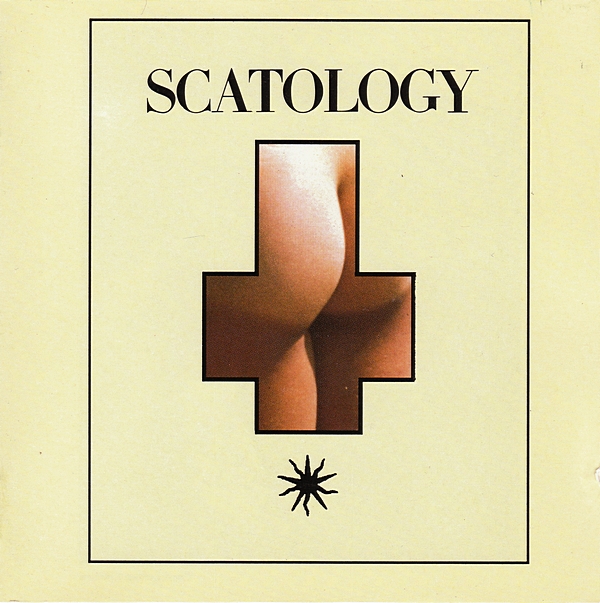
LXXXII. Coil | Scatology


Scatology
©Force And Form. UK, 1984.


‟Coil signified the transition of industrial-rock to a more esoteric and traditional fusion of styles. If Peter Christopherson's previous band, Throbbing Gristle, conjured the vision of the death factory, Coil were inspired by the musical forms of the pounding march, the national anthem, the symphonic element, the ritual, and then magnified them in an industrial context, thus maximizing the psychological effect.

It started with the distorted waltz "Ubu Noir", which served only as an introduction. The album started proper with the bombastic industrial music-hall "Panic" (a la Foetus). The psychological landscape of "At The Heart Of It All" was far more effective, it's symphonic psychedelia gliding around a frozen and frightening ambience. This intriguing sound was further highlighted by the ritualistic waltz "Tenderness Of Wolves", featuring vocals by Gavin Friday (of Virgin Prunes fame).

The clanging paroxysm of "The Spoiler" got into Killing Joke (circa What's THIS For...!) territory, albeit in a more chilly and haunted setting. The more normal industrial-glam "Solar Lodge" followed, but it was "The Sewage-Workers Birthday Party" that stole the show, built around feedback distortions. The metallic anthem/ stomp "Godhead=Deathead" was even more intense, exhibiting the power of a fascist march. "Cathedral In Flames" was cut from the same cloth, but emphasized the ritualistic aspect, as if the twisted coronation of a dictator.‟

Ily


martes, 20 de septiembre de 2011

LXXVIII. Endvura | The Dark Is Light Enough


The Dark Is Light Enough
©Allegoria. Schweizerische, 1996.

 
‟Endura are soundscape alchemists combining synthesizers reminiscent of Tangerine Dream with (un)healthy doses of Aleister Crowley, H.P. Lovecraft, and psychedelic drugs. Brought together by friends that were sure the pair shared similar interests, Stephen Pennick and Christopher Walton began a journey into the realms of ambient electronics in 1993. After two cassette releases, the next year saw the release of their first CD, "Dream of Dark Waters" on the German label Nature and Art.Endura would remain silent until the summer of '96 and the unveiling of three simultaneous releases. These three releases were "The Light is Dark Enough" on Allegoria, "Liber Leviathan" on Aesthetic Death, and "Black Eden" on America's chthonic Red Stream.  

Though each full length CD is unique both in style and concept, there are similarities. Those more inclined to medieval devil worship and sabbat dancing will want to begin with "Black Eden". Those partial to oceanic depths and what lurks beneath the waves should first swim within the dark waters of "Liber Leviathan". "The Dark is Light Enough" will await the converted follower on unholy ground. 
The songs of the dead dreamer are carved upon the flesh of Endura. Their music dares to breach the abyss and pull the listener feet first into bottomless gulfs somewhere at the edge of insanity's imagination. Endura's ambient impressions take the listener to a deeper darkness buried somewhere within the subconscious. Let us hope that all of us can crawl out in one piece.‟
Chad Hensley


sábado, 17 de septiembre de 2011

LXXIV. Have A Nice Life | Deathconsciousness


Deathconsciuosness
©Enemies List. US, 2008.


‟Desde Middletown, Connecticut-Estados Unidos, aparece este engendro empeñado en desolar con un disco doble tan terrorífico como vital: oscuridad, espacio amurallado, golpeteo metálico y imaginería ocultista, convergen en una producción sólida y totalmente extraña para estos tiempos que corren.
Hay un ambiente post-punk sofocante que recorre los temas de "Deathconsciousness", podría haber sido grabado en la etapa de negrura dark a comienzos de los 80's junto a The Chameleons, Joy Division, And Also the Trees, y los Cure de "Pornography" y sería un clásico, pero no, es 2008 y eso queda de manifiesto en el ruidismo cavernoso de "The Big Gloom", ocho minutos de espesura extrema con voces en penumbra, puro doom noise con bases industriales, un manjar para los que gustan de la oscuridad sin fronteras, sin embargo queda un dejo de nostalgia sobre todo en la interpretación vocal, de donde vendrá no tengo la menor idea.

Dos discos que suman casi dos horas de desesperación, drone, ambientes tenebrosos e inspiración mortuoria, era necesario tanto, no lo sé, pero al parecer estos norteamericanos quieren que no tengas descanso en este dilatado trayecto por las masmorras del sonido oscurecido.
"Telephony" despierta las más profundas honduras del ser con una guitarra que baila por bordes de entendimiento, mientras las voces acarician junto al metal abrasivo de una percusión omnipresente, el resultado es hermoso de todas maneras.
Los han descrito como una mezcla entre My bloody valentine, Skinny Puppy, Sunn o))) y los bajos huracanados de Joy Division, yo creo que van más allá y de seguro tomará un tiempo el acostumbrarse a esta bestial resonancia.
El trabajo se acompaña de un librillo de 75 páginas, escrito por un historiador antiguo, que trata sobre simbología y la muerte, "On An Obscure Text" se llama.
Cuentan que se demoraron 5 años en terminar esta obra sonora maldita, quedará como legado o se desvanecerá, quién sabe. Desde ya deberías escucharla.‟

Raúl Cabrera H.


domingo, 28 de agosto de 2011

LXI. O Quam Tristis | Le Rituel Sacré


Le Rituel Sacré
©Palace Of Worms. Italia, 2002.


‟In two years they have grown to a very good level of composition. This can be described as neo Gregorian ambient. Every track here is a small masterpiece. All the music develops in a very natural way from “Oferimus Tibi” till “Et incarnatus est” giving you the opportunity to travel in the Dark Ages. The vocals are of a very good quality, and more Gregorian than on the other CD. Also the atmosphere is great. This music cannot be described in words. Worthy to listen and to buy!!!‟


 Carlaont Catalin


domingo, 21 de agosto de 2011

LVII. Beyond Sensory Experience | No Lights In Our Eyes


No Lights In Our Eyes
©Cold Meat Industry. Sverige, 2008.


‟The Swedish depressive duo Beyond Sensory Experience returns with No Lights In Our Eyes, BSE’s seventh album overall and their second for Cold Meat Industry, following The Dull Routine Of Existence (also reviewed by Judas Kiss). BSE consists of K. Meizter, last heard by these ears collaborating with Polish project Horologium on Eight Studies In Transition, and Drakhon, sometimes of MZ.412.
  
As with the Dull Routine… album, BSE’s brand of dark ambient is distinctively enervated and wan, with quiet, desultory piano lines, distant and washed-out vocal samples, simple, plangent drones and echoes, and an overwhelming feeling of listless despair. Not an ideal party album, then, but powerful in its own quiet way. No Lights In Our Eyes is evidently conceived as a companion piece to the Pursuit Of Pleasure and Dull Routine… albums, with the focus this time around on ‘death and the subconscious sides of life’. Sex, futile routines and death – BSE’s take on human existence isn’t exactly life-affirming, but it fits rather well into the grimly stoical Scandinavian tradition of such figures as Ingmar Bergman and Søren Kierkegaard.
  
No Lights In Our Eyes contains ten tracks extending over 56 minutes, and beginning with the somber organ drones and lonely piano notes of ‘Funerals’. Whispered vocals emphasise the atmosphere of disconnection and remoteness. Other particularly interesting tracks include ‘Across The Divide’, whichc has a warmer, fuller sound and even the vestiges of a trip-hop beat under jangling guitar, augmented by sweeps of orchestral strings, the title track, ‘No Lights In Our Eyes’, which at nearly nine minutes is the longest on the album, and which again employs slowly plucked guitar over ambient background drones, and ‘Hearts And Minds’, another long track, based on a repeated phrase of four plucked notes interspersed with strange muffled whimpering and sobbing, leading into extended church-organ drones reminiscent of Nico’s harmonium work, and a repeated refrain of “In our hearts – in our memories”. Nico, in fact, is a good comparison point for the work of BSE in general, for whilst BSE, of course, lack her unmistakable vocals, they do share a similarly dark and grief-stricken worldview. It’s also easy to imagine BSE’s music being used on the soundtrack of gloomy European arthouse films.
  
There’s no doubt that the music of Beyond Sensory Experience will not appeal to everyone, maybe not even all dark ambient fans. Thrill-seekers and those with short attention spans are going to find this music boring and pointless. And although there’s plenty of sadness to be found here, BSE have little to offer in the way of romantic melancholy – their music is just too bleak and stark. But those with introverted, depressive tendencies may find a sparse and wintry satisfaction in BSE’s understated but quietly devastating ambient.‟

Simon Collins