martes, 27 de septiembre de 2011

LXXXIV: Dead Can Dance | Spleen And Ideal


Spleen And Ideal
©4AD. UK, 1985.


‟Dead Can Dance defined their music in Spleen and Ideal, moving away from gothic-rock, though still belonging in the age of gothic-rock, as exemplified by "De Profundis", which is a pure liturgy, a sound that is further abstracted in the ceremonial pounding of "Ascension", which veers towards impressionist sound-painting, i.e. pure atmosphere. It's a spectacular start but which doesn't last very long, with Lisa Gerrard's medieval litany "Circumradiant Dawn" and Brendan Perry's pompous (but tame) "The Cardinal Sin" (halfway between a ceremonial chant and an existential ballad) being far less impressive. Thankfully, "Mesmerism" returns to a sensational atmosphere: part Slavic dance, part middle-eastern ecstatic chorus, and part European symphonic splendour, all the while Perry reverts to the dense marching ceremony "Enigma Of The Absolute". European classical pessimism returns in "Advent", which also confirms they still rely on the post-punk beat. "Avatar" (with it's breathtaking coda) sort of encapsulates the method of the whole album, which is: getting the ethnic ceremonial litany, adding the sparkling textures of new-age (which themselves are a new form of symphonic music) and working within the framework of European pessimism (which is also the framework that gothic-rock adheres to). After such a highlight, the closing "Indoctrination" feels much inferior, which also underlines that this is a rather uneven album.‟


Ily


domingo, 25 de septiembre de 2011

LXXXIII. Lycia | Ionia


Ionia
©Projekt. US, 1991.


‟This album is about human weakness and regrets. In the first track, a man see his will dragged down by a thing called "Ionia".
Even if Ionia is personified (Mike VanPorfleet is talking about her face and her grin) it doesn't suit the general mood of the album to think she is a woman. It rather reminds me a lot of Oscar wilde "I can resist everything except temptation", that Ionia must be a symbol of temptation. I'm really fond of Portfleet's vision of music and art, you can't find a single track of that man that isn't serious as hell. Poetic without being naive, depressed without being angry (which is extremely rare and almost makes his music unique), that album has all arguments of a masterpiece, despite of having been roughly produced (related to his equipment at that time). The second track without the vocals could have been on a silent hill soundtrack, and songs like "november, monsoon II" fit very well the mood of the music from "legacy of kain blood omen".
I strongly recommend this album for all the openminded music lovers out there, it's just a pity the work of that guy (moreover who has had to deal with diabetes all his career long) isn't more known. He is definitely to put among too many good artists who haven't really the popularity they deserve.‟

Dimitri Ostrovitch


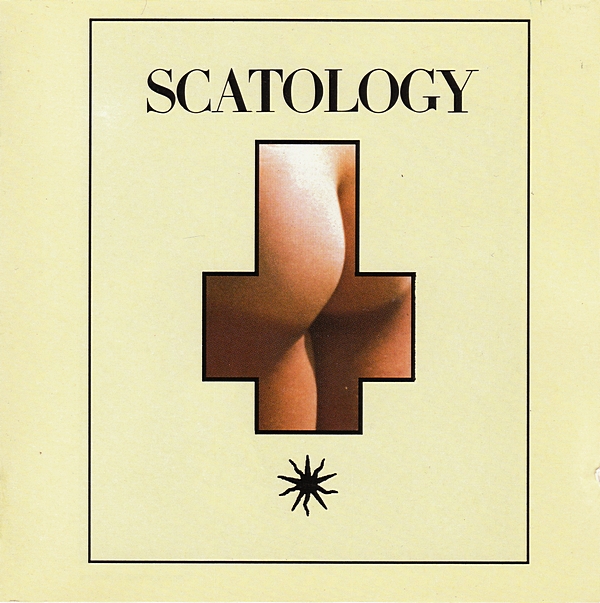
LXXXII. Coil | Scatology


Scatology
©Force And Form. UK, 1984.


‟Coil signified the transition of industrial-rock to a more esoteric and traditional fusion of styles. If Peter Christopherson's previous band, Throbbing Gristle, conjured the vision of the death factory, Coil were inspired by the musical forms of the pounding march, the national anthem, the symphonic element, the ritual, and then magnified them in an industrial context, thus maximizing the psychological effect.

It started with the distorted waltz "Ubu Noir", which served only as an introduction. The album started proper with the bombastic industrial music-hall "Panic" (a la Foetus). The psychological landscape of "At The Heart Of It All" was far more effective, it's symphonic psychedelia gliding around a frozen and frightening ambience. This intriguing sound was further highlighted by the ritualistic waltz "Tenderness Of Wolves", featuring vocals by Gavin Friday (of Virgin Prunes fame).

The clanging paroxysm of "The Spoiler" got into Killing Joke (circa What's THIS For...!) territory, albeit in a more chilly and haunted setting. The more normal industrial-glam "Solar Lodge" followed, but it was "The Sewage-Workers Birthday Party" that stole the show, built around feedback distortions. The metallic anthem/ stomp "Godhead=Deathead" was even more intense, exhibiting the power of a fascist march. "Cathedral In Flames" was cut from the same cloth, but emphasized the ritualistic aspect, as if the twisted coronation of a dictator.‟

Ily


LXXXI. Les Fragments De La Nuit | Musique Du Crépuscule


Musique Du Crépuscule
©Equlibrium Music. Portugal, 2008.


‟Epic, sublime, intimate and euphoric. I thought long and hard about how I wanted to describe Les Fragments de la Nuit’s album, “Musique du crépuscule”, and really, it can be summed up with those four words. The music is composed by a small band with cello, violin and piano, so it is very neoclassical in nature. But this is neoclassicalin the most etherealsense, and the music on “Musique du crépuscule” really transcends what conventions I normally use to describe beautiful music.

On the band’s Myspace page, they list composers such a Steve Reich and Philip Glass as influences. I don’t hear much experimental sound here as it sounds like there is a definite vision, but I definitely hear the intimate, introspective qualities of Glass present. They also list Godspeed You! Black Emperor as an influence. Again, I hear nothing similar to Godspeed or post-rock. There is definitely a similarity to Rachel’s “Music for Egon Schiele“, but even that comparison is fleeting. “Musique du crépuscule” is dark and epic like sound track work, using occasionally intense staccato rhythms, and really brooding progressions. However, where the music is larger than life at times, it is highly personal and reflective. Where it has similarities to a lot of music I listen to, it really is highly original work.

If you like neoclassical music, and want something as dreamy and sublime as it is dark and brooding, I definitely recommend this album.‟


Obsequious


viernes, 23 de septiembre de 2011

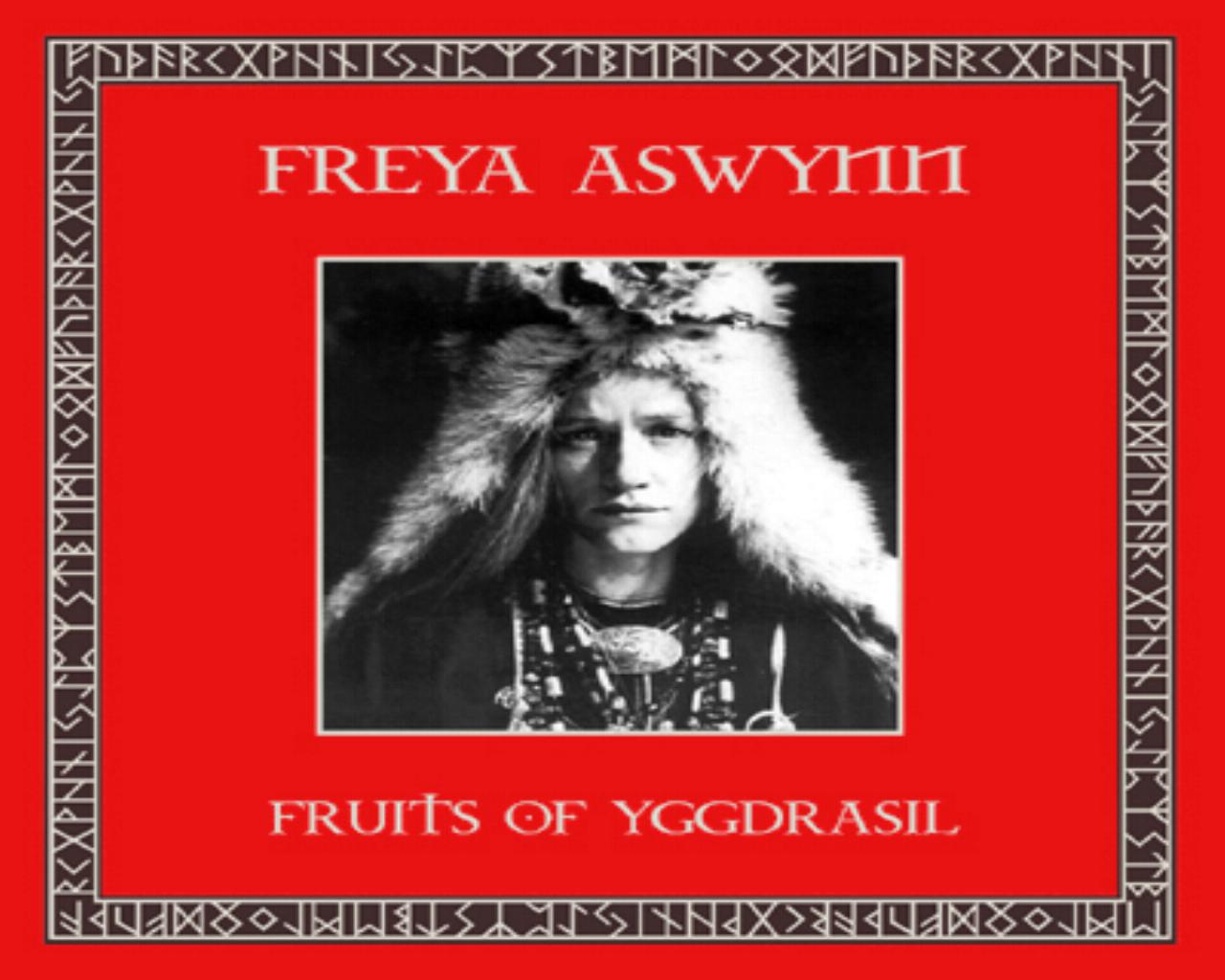
LXXX. Freya Aswynn | Fruits Of Yggdrasil


Fruits Of Yggdrasil
©Edition Ananael. Österreich, 2002.


‟For those of you who dont know, Freya Aswynn's is the entity created by Elizabeth Hooijschuur a figure of considerable distinction within the Norse heathen community, a dedicated priestess of Odin,  rune-mistress and writer that in past years has collaborated with some musical projects such as 6omm, Current 93, Les Joyaux De La Princesse and Fire+Ice, well know artists in the field of Neo-Folk music.
 Aswynn's" has  released three albums under her own name, The Fruits Of Yggdrasil was originally released as a limited-edition vinyl LP on Eyas Media in 1987,  1995’s Shades Of Yggdrasil  and 1998’s Songs Of Yggdrasil, which was released to accompany the Northern Mysteries and Magick book.  The Fruits Of Yggdrasil was re-released in 2002 on the Austrian label Edition Ananael, with bonus tracks including Freya’s tracks with Current 93 and Fire + Ice, as well as two tracks with Wayne Owens originally released on Shade of Yggdrasil, and it has now been released by the Hau Ruck!.
This album’s focus is on initiation into the northern mysteries, the sound is difficult to describe, the spoken words are always present, reciting magic and ancestry words, the tribal and industrial percussions set the pace,  haunting flutes and  background weird soundscapes thicken the beauty and mystery of this record, that i higgly recommend  if you have an open mind.
‟


martes, 20 de septiembre de 2011

LXXIX. Die Form | L'Âme Électrique


L'Âme Électrique
©Hyperium. Deutschland, 1995.


‟Sounds great real loud or low enough to sleep too. I must warn you though: If you play this at nite while you sleep, the music & Elaine's voice will creep up under your flesh and contort your dreams into the dark realms of extascy and bliss....maybe, Then again you may find yourself in a 16th century dungeon just before the executioner chops off your head with an axe ....you never know?
I see myself buying many more Die Forms CD's in the near future. If I had to describe them I would say: A cross between Skinny Puppy/Thrill Kill Kult & Dead Can Dance/Enigma, maybe a touch of Frontline Assembly? Most Definately a Worthy addition to my collection. I know now why I can never find D.F. cd's in the used bin... either nobody in their right mind would ever get rid of them, or they just get snatched up quick ??? Oh well Some bands I dont mind paying full price for....PIG, M.Manson, NIN, Ministry, KMFDM, System of a Down, etc.
Hauntingly beautiful music,if you by chance think your house has a ghost floating around in it then I dont recommend listening to this by yourself, at night, alone, in the dark.
‟  

Magadogx13


LXXVIII. Endvura | The Dark Is Light Enough


The Dark Is Light Enough
©Allegoria. Schweizerische, 1996.

 
‟Endura are soundscape alchemists combining synthesizers reminiscent of Tangerine Dream with (un)healthy doses of Aleister Crowley, H.P. Lovecraft, and psychedelic drugs. Brought together by friends that were sure the pair shared similar interests, Stephen Pennick and Christopher Walton began a journey into the realms of ambient electronics in 1993. After two cassette releases, the next year saw the release of their first CD, "Dream of Dark Waters" on the German label Nature and Art.Endura would remain silent until the summer of '96 and the unveiling of three simultaneous releases. These three releases were "The Light is Dark Enough" on Allegoria, "Liber Leviathan" on Aesthetic Death, and "Black Eden" on America's chthonic Red Stream.  

Though each full length CD is unique both in style and concept, there are similarities. Those more inclined to medieval devil worship and sabbat dancing will want to begin with "Black Eden". Those partial to oceanic depths and what lurks beneath the waves should first swim within the dark waters of "Liber Leviathan". "The Dark is Light Enough" will await the converted follower on unholy ground. 
The songs of the dead dreamer are carved upon the flesh of Endura. Their music dares to breach the abyss and pull the listener feet first into bottomless gulfs somewhere at the edge of insanity's imagination. Endura's ambient impressions take the listener to a deeper darkness buried somewhere within the subconscious. Let us hope that all of us can crawl out in one piece.‟
Chad Hensley


lunes, 19 de septiembre de 2011

LXXVII. ANTIchildLEAGUE | The Father


The Father
©Hagshadow. UK, 2008.


‟AntiChildLeague is the noise project of Gaya Donadio renowned for her tireless promotion of underground music live events in London under the banner of Hinoeuma the Malediction. The Father is their first full-length release and it’s a varied outpouring of sounds concerning control, oppression and patriarchy. The Father flits between spoken word and instrumental noise pieces, rammed with samples. Gaya Donadio intones the lyrics; her heavily accented Italian voice, emphasizing key words and segments. The Father makes full use of rhythmic noise, looped under the barrage of noise and corrosive electronics, given a wonderful clarity by 6 Comm’s Patrick Leagas aka Godlesstate who was responsible for the mixing and production here.

Much of The Father, however, falls into generic noise territory. The power noise of ‘Overpopulate Destroy’ with it morass of raging voices or ‘Project The Self Absent Self’ which takes in treated film samples over modulated shrieks and twisted dial tones, and the distorted bass rumbles, crackling textures of ‘C From Far’ don’t stray too far from countless other power noise outfits. Where AntiChildLeague come into their own is on the lyric based tracks where Donadio takes the central role. ‘Gate To Heaven Entry To Hell’ is a wonderful opening shot with its repetitive looped beats, buzzing slabs of noise and heavily processed vocals.

Even when AntiChildLeague step down the pace as they do on ‘Occult Purity’ with its churning looped beats, sinister live buzz tones and Donadio’s continuous demands to “Set yourself free” they retain a tension fuelled edge. ‘E-Man’ follows similar territory, with Donadio throwing lines in an imposing manner, surrounded by corrosive sweeps of noise. It’s another effective moment from this female-fronted noise assault. Both pale in comparison to ‘Only One Mother’, where above crackling textures, Donadio reveals the true face of mother nature: a brutal, unflinching, cruel matriarch. A mother of life and death. “She is the Devil”, Donadio mischievously whispers with a wicked glint in her eye.

It all ends on a shrieking power electronics affair, with distorted aggro-vocals reduced to a repeated, spitting of the title, ‘Burn The Cross’. In a world of male-dominated noise acts AntiChildLeague could easily have attempted to redress the balance, instead they offer up their own take and own themes. The Father is all the better for it.‟


domingo, 18 de septiembre de 2011

LXXVI. Diamanda Galás | The Litanies Of Satan


The Litanies Of Satan
©Y Records. UK, 1982.


‟Una serie de sonidos que no bajan de lo francamente escalofriante. Lamentos, gritos, silbidos, chillidos... todo lo que pueda hacer un referente a la locura, a lo oscuro y lo macabro está contenido en dos tracks de verdadero culto. Diamanda muestra que llegó a este mundo a causar cuando menos un poco de perturbación y de qué manera lo logra. Un disco obligatorio.
Como decía un amigo por ahí, si los autoproclamados "góticos" estuvieran mejor informados, este disco debería ser su biblia negra y Diamanda su reina.

El primer corte de poco más de 12 minutos "The Letanies Of Satan" ha sido tomado desde el poema del mismo nombre del poeta maldito francés Charles Baudelaire, el segundo track de 17 minutos "Wild Woman With Steak-Knives (Homicidal Love Song For Solo Scream)" está inspirado en la tragedia grotesca "Eyes Without Blood" de la propia Diamanda Galás.
Definir este disco como oscuro es poco, es espeluznante, de verdad tenemos acá una visión infernal.‟

Projekct 5


sábado, 17 de septiembre de 2011

LXXV. NON | In The Shadow Of The Sword


In The Shadow Of The Sword
©Mute. UK, 1992.


‟This one is simply a classic. The first ever NON release I owned was the mind crushing "Physical Evidence". I then rushed out the moment "Blood And Flame" came out and purchased it. Back then, with out the aid of the internet, it was perfectly clear that Boyd Rice was off his nut. This was crystallized in 1990 with the Death In June track "Bring In The Night" and the venomous "Music, Martinis, and Misanthropy". During this time of hyper-creativity Boyd teamed up with friends Douglas P and Rose Mcdowall, fellow Misanthrope (and touring Japan at that time) Tony Wakeford... and Boyd's current roommate, a young Michael Moynihan (who at the time was wrapping up his existence as Coup De Grace). Together they played recorded a live performance in Osaka, Japan, July 3rd 1989. This powerful experience has been preserved in two forms; "In The Shadow Of The Sword" - presented here, and "Live In Osaka" the DVD.Non Live In Osaka, 1989. For this release tracks 1-8 represent the Osaka performance. 9-13 were recorded back in Colorado.‟


LXXIV. Have A Nice Life | Deathconsciousness


Deathconsciuosness
©Enemies List. US, 2008.


‟Desde Middletown, Connecticut-Estados Unidos, aparece este engendro empeñado en desolar con un disco doble tan terrorífico como vital: oscuridad, espacio amurallado, golpeteo metálico y imaginería ocultista, convergen en una producción sólida y totalmente extraña para estos tiempos que corren.
Hay un ambiente post-punk sofocante que recorre los temas de "Deathconsciousness", podría haber sido grabado en la etapa de negrura dark a comienzos de los 80's junto a The Chameleons, Joy Division, And Also the Trees, y los Cure de "Pornography" y sería un clásico, pero no, es 2008 y eso queda de manifiesto en el ruidismo cavernoso de "The Big Gloom", ocho minutos de espesura extrema con voces en penumbra, puro doom noise con bases industriales, un manjar para los que gustan de la oscuridad sin fronteras, sin embargo queda un dejo de nostalgia sobre todo en la interpretación vocal, de donde vendrá no tengo la menor idea.

Dos discos que suman casi dos horas de desesperación, drone, ambientes tenebrosos e inspiración mortuoria, era necesario tanto, no lo sé, pero al parecer estos norteamericanos quieren que no tengas descanso en este dilatado trayecto por las masmorras del sonido oscurecido.
"Telephony" despierta las más profundas honduras del ser con una guitarra que baila por bordes de entendimiento, mientras las voces acarician junto al metal abrasivo de una percusión omnipresente, el resultado es hermoso de todas maneras.
Los han descrito como una mezcla entre My bloody valentine, Skinny Puppy, Sunn o))) y los bajos huracanados de Joy Division, yo creo que van más allá y de seguro tomará un tiempo el acostumbrarse a esta bestial resonancia.
El trabajo se acompaña de un librillo de 75 páginas, escrito por un historiador antiguo, que trata sobre simbología y la muerte, "On An Obscure Text" se llama.
Cuentan que se demoraron 5 años en terminar esta obra sonora maldita, quedará como legado o se desvanecerá, quién sabe. Desde ya deberías escucharla.‟

Raúl Cabrera H.


LXXIII. Dollboy | Ghost Stations


Ghost Stations
©Second Language. UK, 2010.


‟Una ‘Estación fantasma’, de acuerdo a Wikipedia, es la traducción usual de la palabra alemana Geisterbahnhöfe, termino usado para describir ciertas estaciones del metro de Berlín (la U-Bahn y la S-Bahn) que fueron cerradas durante la división de la ciudad durante la Guerra Fría. El término, desde entonces se usa para describir cualquier estación en desuso en una línea de tren subterráneo. Por otro lado, Dollboy es el seudónimo del músico inglés Oliver Cherer, músico con tres discos largos hasta la fecha, para empresas como Static Caravan o Arable. Finalmente, “Ghost Stations / Geisterbahnhöfe” es aquello que une ambos conceptos, es el nombre del último trabajo de Dollboy, el primero para Second Language.

El disco, como era de suponerse, hace referencia a esas estaciones abandonadas, tanto a las de la capital alemana como a las que existen en cerca de su hogar en Londres. Usando grabaciones de campo registradas en lugares antes habitados, lo que Cherer hace es recrear esos parajes donde el encuentro furtivo arriba de un viejo ferrocarril no se produce en mucho tiempo, intentando revivir la atmósfera que existía en esas estaciones que unían acercaban y ciudades sobre explotadas por personas que hoy solo viven en los recuerdos. El álbum solo contiene dos canciones de largo aliento. La más extensa, “Down Street/ York Road/ South Kentish Town/ Brompton Road/ Bull & Bush/ Strand” recorre las estaciones de Londres a través de ciertos toques de jazz pop, según como lo entendía Mark Hollis, pianos de juguete, cajas de música, ambient desolador y pianos muy desolados. “Warschauer Strasse/ Jannowitzbrucke/ Potsdamer Platz/ Oranienburger Strasse/ Unter Den Linden” utiliza mas o menos los mismo recursos, más algo de electrónica casera y algunas trompetas un tanto difusas. En ambos casos, en ambas piezas queda la sensación de oír remembranzas de pasajeros ausentes, el ruido de almas muertas hablando entre paredes gastadas, en forma de la nueva tradición post-clásica, exibiendo las influencias de Brian Eno –la primera vez que Dollboy está tan cerca de él–, electrónica alemana e incluso como apunta la hoja de prensa, con mucha razón, el disco Gavin Bryars “The Sinking of the Titanic” (Obscure, 1975), disco que también intenta recrear habitaciones muertas.

Con sonidos que recurrentemente evocan melodías pretéritas y tonalidades entre sombras, “Ghost Stations / Geisterbahnhöfe”, o el ruido de fondo del subsuelo, esboza siluetas de música espectral. Partituras borrosas para estaciones fantasmas. “He intentado imaginarme los espíritus de aquellos que pudieron haber pasado a través de ellos: persona que viaja diariamente al lugar de trabajo, vividores, espías, y los restos en descomposición de orquestas de baile fantasmales”. El eco del pasado retumbando entre trenes quietos y paredes vacías.‟


LXXII. Judgement Of Paris | Conversion


Conversion (reissue)
©Projekt: Archive. US, 2000.


‟From its opening track “Windswept” to its closer “Eleven,” Judgement of Paris’ ambitious 18-track debut juxtaposes organic and inorganic sound sources, evoking post-apocalyptic sirens, Middle Eastern textures, nursery-rhyme bells, Native American ceremony, images of medieval liturgy, and the twisted wee hours of rave ecstasy.
Using a combination of live keyboards and sequences, fretless electric bass, acoustic and electric guitars, woodwinds, hammer dulcimer, and a variety of percussion instruments, the band has produced a darkly textured and often hypnotic sound. Recorded live to DAT over a one-month period in late 1991, Conversion brings to mind such varied artists as Dead Can Dance, Fatboy Slim, David Sylvian, and early Pink Floyd.

This is obviously a young band without a definitive sound, but the resulting eclecticism coupled with a surprising compositional maturity is wonderfully intriguing. “Reign” appears to be an homage to Bach’s organ preludes. “Spheres of Influence” makes a breathtaking midstream shift from dancefloor highlife to a creamy slice of mutant bluegrass.
The tintinnabulations of the triptych “Denial (Part One),” “Denial (Part Two),” “Denial (Part Three)” shift like the images in a fun-house mirror, culminating in a dizzying mix of resonant vocals, chiming dulcimer, churning guitar and a maelstrom of keyboard sweeps and gurgles. The final result is flawed but breathtaking.‟


Sanz Lashley


LXXI. Cello | Alva


Alva
©Simbiose. Portugal, 1993.


‟The band was formed in 1993 by three friends who wanted to explore different musical approaches - José Nave and Pedro Temporão are the original members. This trio played instrumental music for some time, trying to define some musical orientation, wich however would be based on electronics. Soon Cristina Martins joined the band and Cello was formed. The first demo quickly raised the interest of a portuguese independent label, Symbiose, who signed the band for a three records deal. In the same year the first album, "Alva" (1993), was released. Critics didn`t hesitate to point to Cello a place in the portuguese music scene, as a "promissing band", although still looking for a more personalised sound. The internationalization goal was present right from the begining. The earliest Cello compositions and, specially, the use of french lyrics, convinced the band about the good chances of an international carreer in some european countries. This goal was somehow achieved with the first album and consolidated with the second, "À L`Ombre du Temps" (1995). These records had an international destribution through the "independent circuit" - Germany, Italy, France, Belgium, Holand, Greece, México, Hong Kong, etc... Between 1994 and 1997 the band`s releases received good critics and program radios pointed them out as well. The participation on international compilations, side by side with the hype of the alternative european scene - bands like The Young Gods, Bel Canto, Miranda Sex Garden, In The Nursery, Von Magnet, Chandeen, Sleeping Dogs Wake... - would also help Cello`s internationalization process. In Portugal the band gradually conquered new fans as well, along the music work and the intense live presentations. They toured all over the country, passing through the main stages, suporting sometimes foreign bands - Cocteau Twins, Red House Painters, Sol Invictus... By the other side, the band would gather media unanimity through out the years: albums, EP`s, singles were considered "quality releases" - some would be elected among the best portuguese records. And after five long working years, plus a label change, the band presents the brand new album "Long Voyage" (2000). Eleven electro-rock/pop songs mixing an exciting combination of raw intensity and dizzy frailty... «Cello`s best album», many say. Again, it would be considered among last year`s best portuguese releases. "Aprés-Midi" was released in early 2003. This record is a compilation of remixes, containing also some originals. It was Cello`s last record.‟


LXX. Lovesliescrushing | Voirshn


Voirshn
©Projekt. US, 2002.


‟Lovesliescrushing returns to Projekt with a special mail-order-only release. This CD will not be available in stores. It's the second in a new series of discs from Projekt, presenting excellent music available especially for the fans via our website. This arrangement bypasses the hassle and frustration of retail and makes the music available directly to you.
On their newest album, Voirshn, Lovesliescrushing (one of the few remaining representatives of the 'shoegazer' genre) continues their trend further from the traditional rock elements that characterized earlier dream pop bands. From the beginning, instrumentalist Scott Cortez and vocalist Melissa Arpin distanced themselves from the genre by rejecting conventional song stuctures in favor of an intensified version of the meandering sound that was forcefully inaugurated by MBV's classic Loveless. In Lovesliescrushing, this aesthetic has gradually approached pure ambience. Nevertheless, their typically warm guitars counterveil this tendency even with the absence of percussion and song structure. On Voirshn, their 4th recording, both are either minimal or entirely absent; wordless female vocals drift in and out while 'electronic beats' - guitarnoise softened by semi-lo-fi production - occasionally interrupt a wash of guitar. Although consistent in style, the album avoids sounding like one continuous song through adequately diverse guitar sounds ranging from the lush vibrant tone of the opening track 'glixen' to the subdued quasi-detatched feel of 'sovfx'. Overall, Lovesliescrushing continues to exist between the worlds of shoegazer and ambience, although the ascendant former has once again conceded to the latter. This is pure glitch-bliss.
Lovesliescrushing. [Voirshn] is a synthesis of processed ambient gloss and lo-fi grit, creating a digital-analog hybrid that Scott terms 'glitch-bliss'. Songs were compiled from a palette of sonorities extrapolated from a collection of voice and guitars, warped into rumbling subsonics, staticblast hiss, hazy chord clusters, extended infinite tone loops, melody spirals, avian-like whistles, glistening overtones, voices cut-up into splintered fragments, thoughtforms suspended over warm tonesheets like a ghost cloud, indistinct and luminous. Still eschewing bass and drums, rhythmic elements are culled from filtered guitar tones mutated into stroboscopic pulsations and digital dust clickings. Once again guitardamage is wrought upon six-strings, manipulated, deconstructed, reassembled to create bloodrush pulses reminiscent of a softly humming embryonic landscape of digitized lullabies.‟